29.07.26| logistics
turning complexity into certaintyRecord visitor numbers at Multimodal 2026 reflect more than a successful exhibition – they highlight an industry focussed on resilience, collaboration and practical innovation.
For much of the past five years, the logistics industry has been forced to respond to one challenge after another. Brexit, the pandemic, geopolitical instability, inflation and shifting trade patterns have all tested the resilience of global supply chains.
However, at Multimodal 2026, the conversation had noticeably evolved.
Rather than asking how to cope with uncertainty, delegates discussed how technology, collaboration and improved operational planning can give businesses greater certainty in an increasingly complex world. That shift in thinking was evident throughout the exhibition and conference programme, perhaps explaining why this year’s event proved to be the most successful in the show’s history.
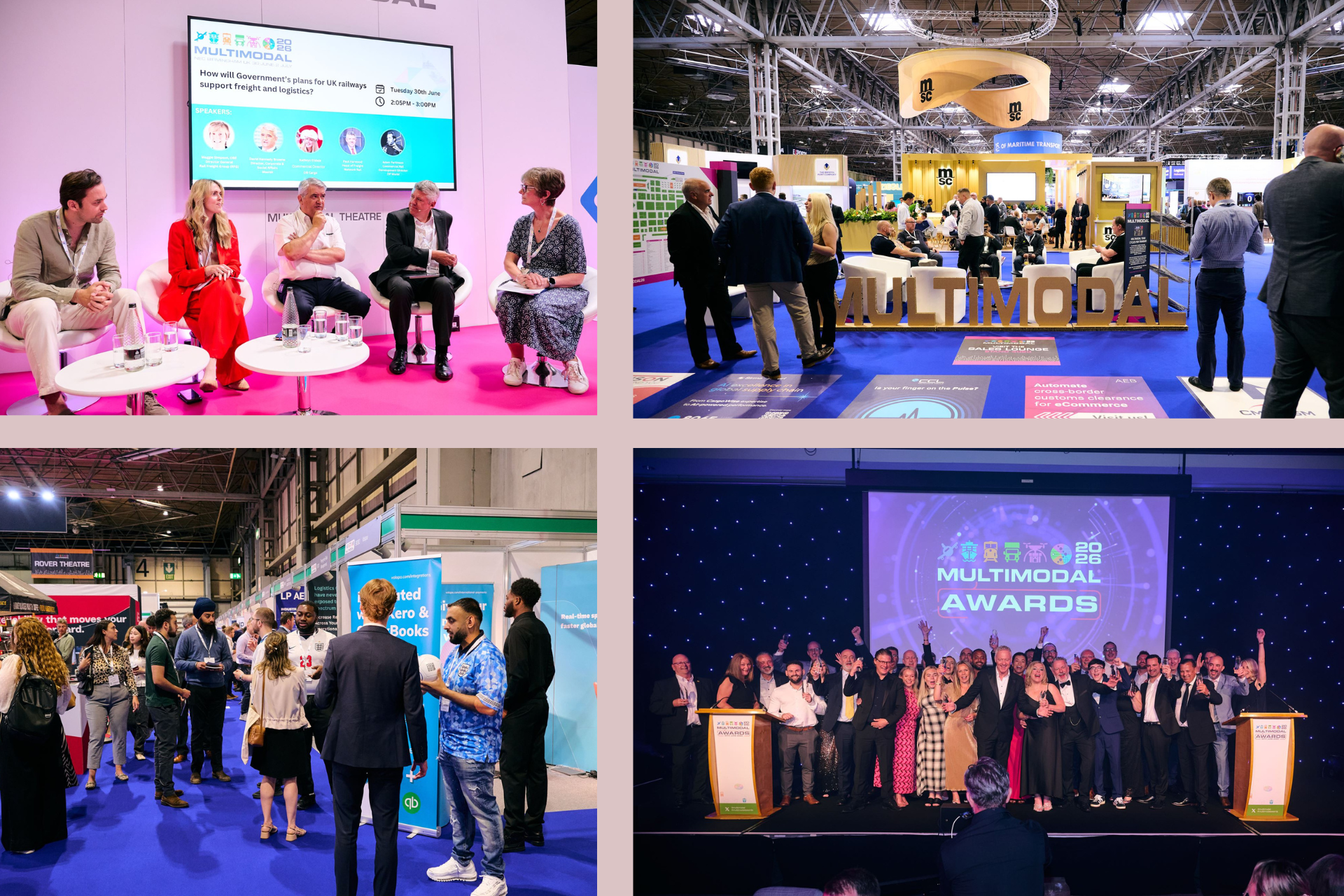
Held at the NEC Birmingham as the flagship event of UK Logistics Week, Multimodal welcomed 14,676 visitors over three days – a provisional 7.5% increase on the previous year – while more than 300 exhibitors showcased products and services across every aspect of freight, transport and logistics.
Co-located with Warehouse, Yard, eDelivery Expo and the Road Transport Expo (RTX), the exhibition once again highlighted the growing connectivity of modern supply chains, bringing together ports, shipping lines, rail operators, hauliers, freight forwarders, warehousing specialists and technology providers to exchange ideas, build relationships and explore new opportunities.
From the moment the doors opened, the exhibition floor reflected a sector looking ahead. While commercial pressures remain, conversations focused on practical solutions that deliver measurable improvements today. Artificial intelligence, automation, digital integration and operational intelligence featured prominently, with technology increasingly judged not by its innovation but by the commercial value it delivers.
That evolution was evident throughout the conference programme.
Across five theatres, more than 120 speakers explored the issues shaping logistics’ future. Artificial intelligence remained a dominant theme, but the debate has clearly matured. Rather than questioning whether AI belongs in logistics, speakers focused on how businesses are already using it to improve planning, optimise operations and support faster, better-informed decisions.
Supply chain resilience remained another major theme as businesses continue to navigate geopolitical uncertainty, changing trade patterns, infrastructure constraints and rising operating costs. The emphasis was no longer simply on improving visibility, but on using better information to make faster decisions, adapt operations and deliver greater certainty for customers.
That message resonated particularly strongly with the ports and intermodal sector. One of the standout sessions, Turning Operational Complexity into Certainty, brought together Craig Bickley, General Manager Intermodal at Maritime Transport, and Jim Slade, UK Commercial Director at Fargo Group, to explore how operators are moving beyond simply tracking containers to create more predictable, reliable supply chains. Their discussion captured a theme that echoed throughout the exhibition: visibility alone is no longer enough. Real value comes from turning data into better decisions, greater operational control, and, ultimately, greater certainty.
Government policy, rail reform, customs processes, and infrastructure investment also featured prominently, underscoring the importance of efficient freight networks to UK economic growth. Sustainability remained firmly on the agenda, though increasingly through a commercial lens, with many sessions showing that reducing emissions often goes hand in hand with improving productivity through better asset utilisation, smarter planning, and fewer empty miles.
People remained as important as technology. Skills shortages, leadership, and workforce development were prominent throughout the programme. At the same time, a new student initiative introduced school and college students to the breadth of careers available in today’s logistics sector, underscoring the importance of attracting the next generation to the industry.
Beyond the conference programme, Multimodal continued to demonstrate one of its greatest strengths: bringing the industry together. In an increasingly digital world, face-to-face meetings remain invaluable for building relationships, sharing knowledge and generating new business opportunities.
The event also celebrated excellence through the Multimodal Awards, recognising outstanding achievement across the maritime, road, rail and air freight sectors and showcasing the innovation and professionalism driving the industry forward.
Reflecting on the event, Robert Jervis, Multimodal Show Director, remarked:
“Multimodal 2026 has been an outstanding show. The energy on the floor, the calibre of conversation in our theatres, and a 7.5% rise in visitor numbers all point to an industry that continues to see huge value in coming together in person. From getting a train to the NEC to accommodating the England World Cup match, the organising team, as ever, did a tremendous job.”
The record visitor numbers underline Multimodal’s continued growth, but perhaps more importantly, they reflect an industry looking ahead. The conversations throughout the three-day event were no longer centred on simply managing disruption, but on improving decision-making, strengthening resilience and investing in technologies and partnerships that deliver tangible commercial value.
If Multimodal 2026 revealed one overarching message, it was that logistics is entering its next chapter with greater confidence. Whether the discussion centred on artificial intelligence, customs, sustainability, skills or intermodal operations, the underlying objective was remarkably consistent: helping businesses turn complexity into certainty.
With exhibition sales for next year already reported to be ahead of schedule, Multimodal 2027 will return to the NEC Birmingham from 29 June to 1 July 2027.