
Tax year-end planning: Maximising allowances before April 5th

Tax year-end planning: Maximising allowances before April 5th

24.3.2025 | Tax

Tax year-end planning: Maximising allowances before April 5

As the end of the tax year approaches, businesses and individuals in the shipping, logistics, and port operations sectors should assess their financial position and maximise available tax reliefs and allowances.

Andrew Diver, Head of Tax at Beatons Accountancy Firm, examines how to reduce tax liabilities and take advantage of government incentives.

Let’s start with income tax saving.

Firstly, ensure your salary exceeds the National insurance threshold to ensure you are entitled to a qualifying year for state pension purposes.

The next consideration is to ensure you fully use your personal allowance (£12,570 for 2024/25). This doesn’t carry forward, so use it or lose it.

You should also look to avoid pinch points in the income tax system.

Where income exceeds £100,000, taxpayers have a marginal rate of tax of 60%, which means you work for the government more than you work for yourself.

Income between £60,000 and £80,000 can also have a high marginal tax rate if you claim child benefit.

Consider making pension contributions, gift aid donations or deferring bonuses to prevent exceeding these thresholds and the painful rates of tax.

Marriage allowance transfer is one of the most under-claimed reliefs – so it is one to consider.

If you are married and, your income is below the personal allowance, and your spouse pays basic-rate tax, you may be able to transfer £1,260 of your allowance to them, reducing their tax bill by £252 per year.

The tax-free dividend allowance is currently £500 in 2024/25, so if you own shares in a logistics or port-related business, consider extracting dividends before the end of the tax year to use the allowance. Having shares held by other family members can enhance the application of this allowance, too. Also, if you are a basic rate taxpayer, consider paying dividends to utilise your full basic rate band (£37,700 for 2024/25), extracting profits at only an 8.75% dividend tax rate.

Finally, if you have an Individual Savings account, the annual ISA allowance is £20,000.

Maximising contributions before tax year-end ensures tax-free interest and capital gains on savings and investments—useful for port operators and business owners planning long-term financial stability.

What about pensions?

The pension annual allowance remains at £60,000 (or lower if subject to tapering). Contributing before April 5 can reduce your taxable income and benefit from tax relief at your marginal rate.

On top of this, if you haven’t used your full pension allowance from the past three tax years, you may be able to carry forward unused reliefs, maximising your contributions before the deadline.

And, while we are on the subject of planning for the future and avoiding tax pitfalls, remember that you can give up to £3,000 per year free of inheritance tax.

Business tax planning

Shipping and logistics businesses investing in plant, machinery, or transport fleets may benefit from the Annual Investment Allowance (AIA), allowing full tax relief on up to £1 million of qualifying expenditure.

Full expensing allows 100% relief on main rate assets and 50% for special rate assets if you purchase new assets. This particularly benefits businesses upgrading port infrastructure, warehouses, and equipment.

Finally, if your business is developing new logistics technology, supply chain efficiencies, or greener shipping initiatives, you may be eligible for R&D tax relief, which can reduce corporation tax or provide cash credits.

Action Plan

In a nutshell, you should:

  • Review your income and tax allowances.
  • Consider maximising your pension and ISA contributions.
  • Consider dividend extractions if you’re a business owner.
  • Use gifting allowances to reduce inheritance tax exposure.
  • Claim all relevant business deductions and capital allowances, especially for equipment, port infrastructure, and fleet upgrades.

Taking action before the tax year-end ensures you don’t miss out on valuable allowances and reliefs.

For tailored tax planning advice relevant to the shipping and logistics sector, visit beatons.co.uk

The Freeport effect: How businesses can benefit

The Freeport effect: How businesses can benefit

24.2.2025 | Tax

The Freeport effect: How businesses can benefit

The financial and strategic advantages of Freeport East. 

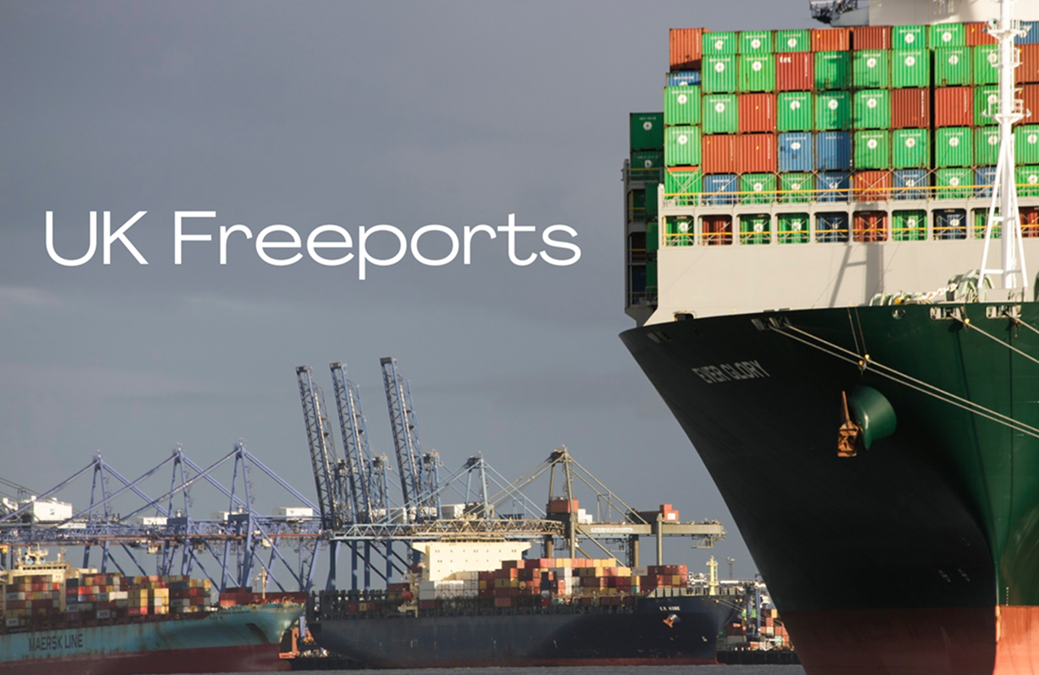
Freeports are designed to boost trade, investment, and job creation, unlocking significant cost savings and new opportunities. As Freeport East marks its second birthday, Andrew Diver, Head of Tax at accountancy firm Beatons, looks at how you can leverage the benefits available.

Freeport East, a low-tax and low-regulation business zone, has attracted £250 million of private investment since it started operating two years ago.

The area, which covers the ports of Felixstowe in Suffolk and Harwich across the water in Essex and the Gateway 14 business park near Stowmarket, has also attracted nearly 2,000 jobs.

So, what is the secret to its success?

Freeports are designed to promote job creation and regeneration, boosting trade, investment, and innovation. Companies operating within these zones benefit from relaxed customs and planning regulations, simplified import and export procedures, enhanced trade promotion, and additional support for innovation.

There are also several tax incentives for businesses located within the designated Freeport zone that engage in eligible activities such as manufacturing, trade, logistics, warehousing, or transport-related services and invest in qualifying assets such as land, machinery, or workforce expansion.

These include:

Stamp Duty Land Tax relief

If you buy or lease commercial property within the Freeport zone before September 2026, you may qualify for full or partial relief on stamp duty. This is designed to attract businesses to the Freeport area and encourage expansion.

Enhanced capital allowances

Businesses investing in plant and machinery within the Freeport can claim 100% first-year tax relief. In the first year, any equipment, vehicles, or technology purchased for business operations can be fully deducted from taxable profits, reducing corporation tax liability.

Business Rates relief

Companies setting up new premises or expanding within the Freeport can receive up to 100% relief on business rates for five years. With rising overhead costs, this can offer significant long-term savings for businesses looking to grow.

National Insurance Contributions (NIC) relief

Employers hiring new staff within the Freeport area can claim NIC relief on salaries up to £25,000 per year per employee. This directly reduces the cost of workforce expansion, making it more attractive to create new jobs in the region.

Customs and Trade Tariff benefits

Businesses can import goods into the Freeport without paying customs duties as long as they are stored or processed before being re-exported. This benefits manufacturers and exporters who need to import raw materials before turning them into final products.

Freeports in action

Magnum Logistics is a business taking full advantage of its Freeport location.

For Eddie Ryan, Commercial Director, the Freeport Effect is twofold: It offers a prime location for growth and financial incentives that help them unlock cost savings and access new opportunities.

He said, “Our strategic, port-centric location and 24/7 operations have enabled us to exceed sales forecasts, particularly in our domestic pallet logistics services, which increased by over 30%, and our warehousing operational volumes, which increased by over 70% each, with a very strong performance in Q4.”

If you would like advice on Freeport benefits, contact the Beatons team today. www.beatons.co.uk

Guidance for freight and shipping business owners considering a sale

Guidance for freight and shipping business owners considering a sale

27.1.2025 | Tax

Guidance for freight and shipping business owners considering a sale

Expert insights for business owners: Key Steps to maximise value before a sale. 

Consolidation in the freight and shipping sector appears to be a current trend, with many business owners exploring their options, seeking valuations and reviewing contracts. Andrew Diver, Head of Tax for Beatons Accountancy firm, looks at some key considerations for organisations seeking clarity before making a sale.

We are often asked how much our business is worth, and it can seem like a how-long-is-a-piece-of-string question. The truth is that it often involves a tug-of-war until a price that suits both parties is agreed upon.

Buyers will look for a greater proportion of the consideration tied to future performance (earn-out), while vendors usually want a clean exit.

While business value ultimately depends on buyer willingness, several standard approaches help determine fair pricing.

A common valuation method combines net assets (physical assets on the balance sheet) with an earnings multiple based on a projected payback period.

You may have heard the term EBITDA (Earnings before Interest, Tax, Depreciation and Amortisation), which is often the earnings adopted.

Factors that can enhance your multiple include:

  • Operational independence from the owner
  • Stable recurring client base
  • Distinctive market positioning
  • Strong management team
  • Robust operational systems
  • Secure long-term property leases

My advice is to consider these points at least a couple of years before considering a sale, as these factors can take some time to implement and embed into an organisation.

Structuring the deal

Buyers typically adjust profit figures to estimate sustainable future earnings by:

  • Removing one-off gains or unusual profits
  • Adding standard operational costs previously paid as dividends
  • Adjusting for excessive owner pension contributions

Many deals incorporate earn-out structures, where part of the sale price depends on post-sale performance metrics like revenue, profit, or customer retention over one to three years. As a vendor, you generally want the lion’s share of your proceeds upfront. For buyers, this reduces overpayment risk. The longer your earn-out period, the longer and more detailed your involvement in the business will likely be after the sale.

My advice would be to think about what periods are being used for earnings purposes. Are we averaging the last three years’ profits, or are we weighing the most recent profits over those of three years ago? Do any of these methods favour your valuation?

Appropriate remuneration packages and employment contracts for exiting shareholders/directors will be required and can be as important as the earn-out details.

Post-sale considerations

Most buyers require seller involvement during the transition to maintain client relationships and ensure a smooth handover. Factor this into your timeline and long-term planning. You want to continue to be involved in the lion’s share of your consideration, which is part of the earn-out!

Tax implications

Tax timing requires careful consideration, particularly with earn-outs.

In the UK, the total sale value tax is due by January 31st following the tax year’s end (April 5th). Earn-out payments that comprise a significant portion of the sale price can create cash flow challenges, as tax liability may exceed initial payments received.

There have also been significant changes to the Business Asset Disposal relief rules following the last budget, which could increase your tax liability by £80,000 over the next couple of years as tax rates will increase.

There could be real benefits in shareholders reviewing how they hold their shares over the next couple of years ahead of any prospective sales.

Professional guidance is essential for navigating these complexities and optimising both deal structure and tax efficiency.

For help and advice, contact the Beatons team by visiting its website, www.beatons.co.uk or calling 01473 659777

Looking back on 2024 – and forward into the New Year

Looking back on 2024 – and forward into the New Year

17.12.2024 | Tax

Looking back on 2024 – and forward into the New Year

Navigating Tax, Trade, and Compliance: Key insights to position your business for success in 2025. 

As this year draws to a close, businesses across the port and freight sectors face a rapidly evolving financial landscape. Andrew Diver, Head of Tax at Beatons Accountancy in Ipswich, looks at changes to tax, trade, and compliance requirements in 2024 and the key considerations that will help you stay ahead in 2025.

From tax changes impacting profits to new systems reshaping how international trade operates, the past year has brought challenges and opportunities for port operators, exporters, importers, and logistics firms.

Corporation Tax and investment opportunities

Let’s first consider the increase in corporation tax, which came into effect in April 2024.

The main rate now stands at 25% for businesses with profits exceeding £250,000, and for medium and large businesses, this could represent a significant shift in tax liability. However, companies earning under £50,000 continue to benefit from the 19% small profits rate, and marginal relief helps bridge the gap for profits between these thresholds.

Despite the higher tax rate, the return of full expensing for capital investments in plant and machinery is an opportunity for many. With some freight and port operators heavily reliant on expensive equipment, this measure allows a 100% deduction of qualifying investments from taxable profits in the year of purchase.

Planning asset acquisitions strategically to maximise this relief will be crucial in 2025.

Exporters, importers, and the new Customs Declarations Service

For businesses dealing with international trade, the transition to the Customs Declaration Service (CDS) has been an operational headache for many in 2024.

Replacing the previous CHIEF system, CDS demands detailed data entry and compliance with revised procedures. However, it also offers greater transparency and integration with HMRC systems, which should bring long-term efficiencies in 2025 and beyond. Here’s hoping!

VAT updates for cross-border trade

The complexities of VAT on cross-border transactions remained a challenge in 2024, especially after the UK introduced new VAT measures to simplify import VAT accounting.

Port businesses must ensure they’re familiar with postponed VAT accounting (PVA), which allows VAT-registered importers to account for VAT on their returns rather than paying it upfront.

Additionally, changes to VAT penalties and interest systems, introduced in January 2024, require closer attention to filing deadlines and accuracy. With penalties now calculated on a points-based system, consistent compliance will save businesses money and administrative hassle.

Making Tax Digital

Making Tax Digital (MTD) continued its rollout. Self-assessment taxpayers, including sole traders and landlords with income over £50,000, will be mandated to comply by April 2025. While most port businesses are larger entities already operating digitally, it’s worth noting that MTD for corporation tax is scheduled for introduction soon.

Businesses should take 2025 to review their digital accounting systems, ensuring they are compatible with MTD requirements.

Employment tax and workforce planning

For port operators and logistics companies with large workforces, changes to employment taxes in 2024 have highlighted the importance of proactive payroll management.

The increase in the National Minimum Wage and the ongoing focus on IR35 compliance have added cost and administrative burdens.

In 2025, businesses will need to stay vigilant as HMRC continues its clampdown on off-payroll and umbrella company working arrangements.

Preparing for sustainability

Environmental, Social, and Governance (ESG) considerations have become more pressing in the port and freight sectors this year, too.

While formal ESG reporting requirements remain limited for SMEs, larger operators may already fall within scope. Even for smaller businesses, aligning operations with sustainability goals can unlock funding opportunities, improve brand reputation, and future-proof operations.

Final thoughts

As we approach 2025, businesses in the port, logistics, and freight sectors must balance compliance with evolving tax laws with capitalising on opportunities for investment and growth.

However, with proper planning, the changes in 2024 don’t have to be hurdles – they can be stepping stones to a more efficient and resilient future.

Inheritance Tax Shake-Up: What it means for family businesses in the ports and logistics sector

Inheritance Tax Shake-Up: What it means for family businesses in the ports and logistics sector

19.11.2024 | Tax

Inheritance Tax Shake-Up: What it means for family businesses in the ports and logistics sector

Andrew Diver of Beatons highlights the need for careful planning. Changes announced in the Autumn Budget may leave family-run businesses facing increased tax burdens and challenges in safeguarding their legacy.

When Chancellor Rachel Reeves announced changes to inheritance tax relief in her recent Budget, media attention focused on farmers. However, there’s a hidden story that affects thousands of business owners across Britain, including those in the port and logistics sector who intend to pass their businesses down to their children. Andrew Diver, Head of Tax at Beatons accountancy firm, explains more.

The dust has not settled after the Autumn Budget announcements because many businesses are still grappling with what it means for them.

This is especially true for those who have built a business they intend to pass on to their children as a legacy.

After all, starting April 2026, business owners face a significant shift in how their inheritance is taxed.

Previously, family businesses could pass down their enterprises largely tax-free. But now, only the first £1 million will receive full protection, with larger businesses facing new tax burdens that could force difficult choices.

A real-world example

Picture this: Sarah and James have spent 30 years building their sea freight and customs management business, now worth £5 million.

They live in a comfortable family home worth £650,000. Under current rules, they could pass everything to their three children without inheritance tax.

But from 2026, their family could face an £800,000 tax bill.

The hidden catch

Here’s where it gets tricky. To pay this tax bill, families might need to:

  • Sell the family home
  • Liquidate business shares
  • Take large dividends from the business (triggering additional tax)

While HMRC offers a 10-year payment plan, interest charges make this an expensive option.

So what can you do?

Don’t panic—there are ways to protect your family’s legacy, and some professional financial planning would be beneficial here.

Options include:

  • Strategic lifetime gifting

Generally, gifts made more than seven years before your passing will usually fall outside your Estate and, therefore, be exempt from inheritance tax. However, if you pass away within seven years of making the gift, this may result in the gift attracting inheritance tax, with a sliding scale of tax relief applied based on how many years have passed since the gift was ultimately made.

  • Smart use of family trusts

A trust is a legal arrangement in which you transfer the ownership of assets into a trust to hold on behalf of the trust’s beneficiaries.   The donor cannot benefit from the trust assets, but they can continue to control them if they are also named as a trustee.   Once assigned to a trust, assets are safeguarded from creditors and legal challenges and will be outside your estate after seven years.

  • Reviewing existing wills, especially between spouses

Crafting a will is a crucial part of inheritance tax planning.  Spouses should also consider whether the mirror wills leaving all assets to each other are now IHT efficient where assets eligible for Business Relief are held.

  • Early planning for business succession

At the heart of any long-term planning should be succession—the process of transitioning management and ownership of your business to the next generation. If you aim to pass on your enterprise to your family, you can involve your children in the business as soon as possible.

If you would like to discuss how these changes will affect you, please contact Beatons on 01473659777 or email info@beatons.co.uk 

US Port Strike Aftermath: Safeguarding shipping finances from future disruptions

US Port Strike Aftermath: Safeguarding shipping finances from future disruptions

23.10.2024 | Tax

US Port Strike Aftermath: Safeguarding shipping finances from future disruptions

Andrew Diver, Head of Tax at Beatons, offers crucial financial strategies for shipping companies to mitigate risks and protect their bottom line in the wake of recent supply chain upheavals. 

A recent US port strike ended last month after a tense negotiation between dockworkers and shippers, stabilising the supply chain and avoiding a long-term fallout. But the days of gridlock and uncertainty, which threw the shipping industry into turmoil, could have finally plunged the economy into potential disaster, with ripple effects worldwide. Here, Andrew Diver, Head of Tax at accountancy firm Beatons, offers advice to shipping companies on how to protect their finances from disruption.

The recent port strike in America followed long-simmering tensions between the International Longshoremen’s Association (ILA) and port operators, which boiled over when contract negotiations hit a wall.

The standoff led to a massive queue of ships waiting to unload their cargo, sparking fears of a nationwide supply chain bottleneck.

The situation grew dire as the strike stretched into its third day, with a growing queue of ships off the coast of major US ports and the real possibility of a far-reaching ripple effect on retailers, manufacturers, consumers and markets around the world. Fortunately, that scenario was averted.

But the strike has served as a reminder of the fragile nature of our global supply chain.

So what—if anything—can businesses in the logistics and shipping industries do to protect themselves from the consequences of a repeat performance?

Mitigating risk

While port strikes and other disruptions to supply chains can be hard to predict, companies can take steps to manage the risks associated with them.

From a business point of view, this might include building stronger relationships with suppliers, diversifying supply chains and partnerships, developing a risk management plan, strengthening contractual agreements and monitoring trends.

But, from a financial point of view, there are also ways to protect yourself, including:

  • Strengthen cash flow management

Cash flow management is one of the most critical areas for shipping companies during a supply chain disruption.

Prolonged delays can tie up working capital in inventory or cause unexpected costs.

Companies should ensure that their liquidity is managed effectively, with sufficient reserves to absorb short-term disruptions. These reserves provide flexibility to cover unexpected costs such as increased shipping fees, expedited transportation, or higher inventory holding costs.

This can be done by forecasting cash flow more accurately, adjusting budgets to account for potential delays, and revisiting credit lines to ensure availability during critical times.

Shortening the collection cycle for receivables and negotiating extended payment terms with suppliers can improve cash flow, too.

Equally, businesses can negotiate longer payment terms with suppliers to reduce cash outflows during disruption periods, giving them more flexibility to manage operational costs.

  • Leverage technology and data analytics.

From an accountancy viewpoint, integrating data analytics into financial reporting ensures that companies have a clearer view of where costs are rising.

This allows companies to make informed decisions about rerouting, resource allocation, or contractual negotiations.

  • Insurance and financial protection

Insurance is an essential tool in managing risk. Shipping companies should explore specialised insurance products that cover supply chain disruptions.

Business interruption insurance, marine insurance, and supply chain risk insurance are all available to protect against losses from events such as port strikes.

From an accounting perspective, companies need to ensure they are fully aware of the extent of their coverage and regularly assess whether their insurance policies are adequate given their exposure to supply chain risks.

The premiums paid should be balanced against the financial losses that might be incurred in the event of a strike or similar disruption.

In a nutshell

Careful financial planning, regular risk assessments, and robust cash management systems can help this industry to weather disruptions and maintain operational stability.

And, with the right approach, companies can protect their bottom line even in times of uncertainty.